
Gillette adverts stand against toxic masculinity. Budweiser makes specially-decorated cups to encourage non-binary and gender-fluid people to feel pride in their identity.
These examples of so-called "woke capitalism"- of corporations promoting progressive social causes - may feel ostentatiously up-to-the-moment. But woke capitalism is not as new as you might think.
Back in 1850, social progress certainly had further to go.
A couple of years earlier, American campaigner Elizabeth Cady Stanton had caused controversy at a women's rights convention by calling for women to be given the vote. Even her supporters worried that it was too ambitious.
Meanwhile, in Boston, a failed actor was trying to make his fortune as an investor.
He had rented space in a workshop showroom, hoping to sell his machine for carving wooden type. But wooden type was falling out of fashion. The device was ingenious, but nobody wanted to buy one.
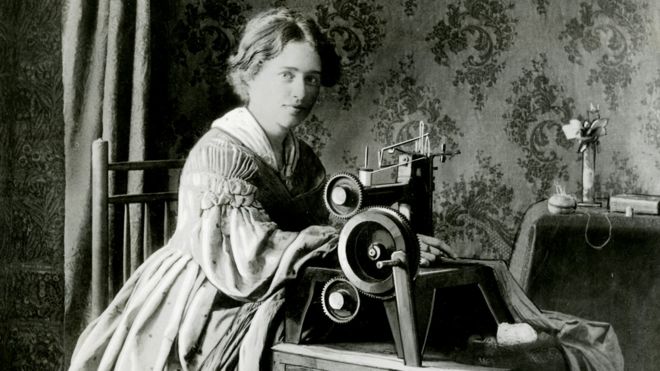
The workshop owner invited the demoralized inventor to take a look at another product which was also struggling: the sewing machine. It did not work very well. Nobody had succeeded in making one that did, despite many attempts for many decades.
The opportunity was clear. True, the time of a seamstress was not expensive - as the New York Herald said: "We know of no class of workwomen who are more poorly paid for their work or who suffer more privation and hardship." But sewing took so much time - 14 hours for a single shirt - that there would be a fortune in speeding it up.
And it was not only seamstresses who suffered: most wives and daughters were expected to sew. This "never-ending, ever-beginning" task, in the words of contemporary writer Sarah Hale, made their lives "nothing but a dull round of everlasting toil".
In that Boston workshop, the inventor sized up the machine he had been asked to admire, and quipped: "You want to do away with the only thing that keeps women quiet."




0 Comments